

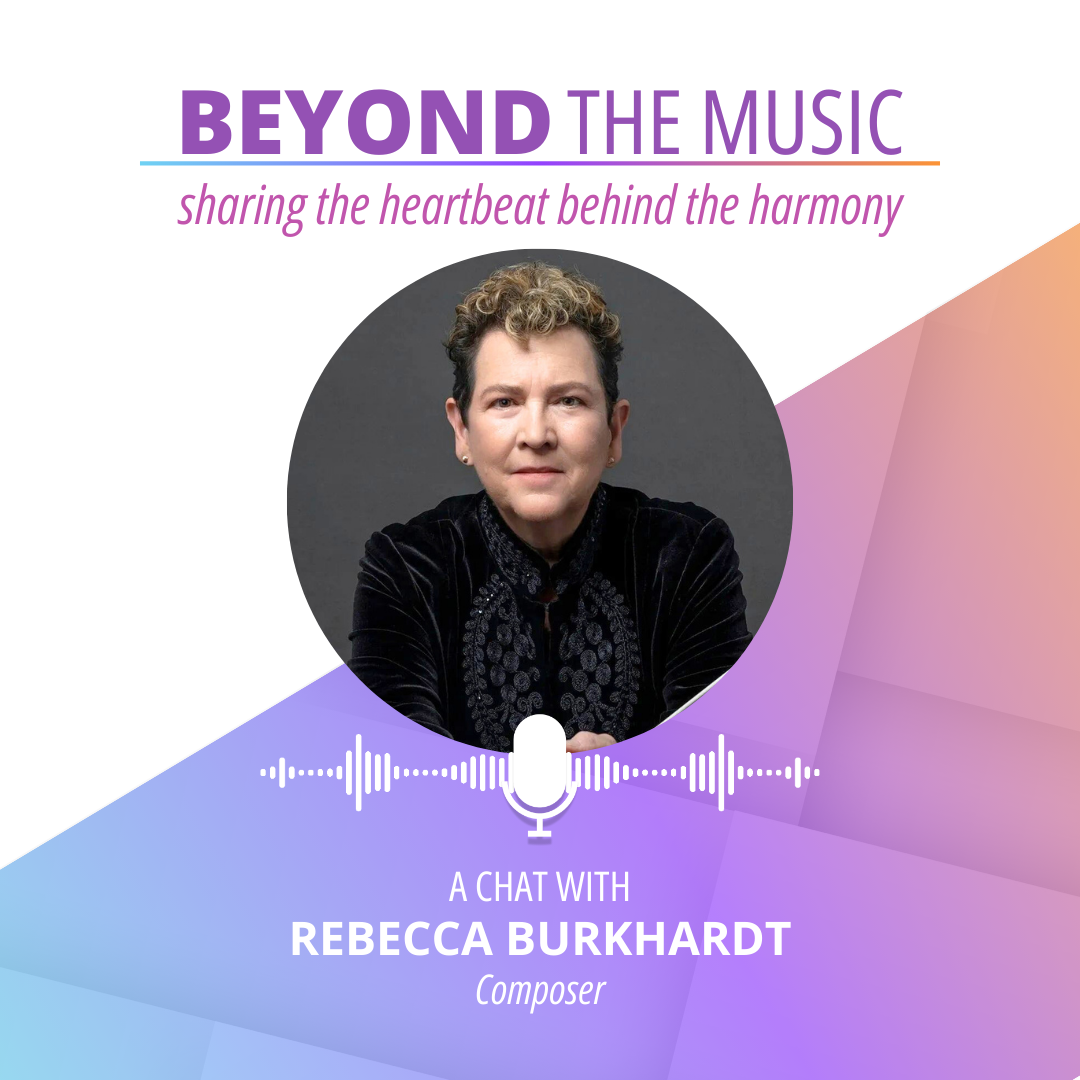
On this episode of Beyond the Music, QCSO Executive Director Brian Baxter sits down with composer Rebecca Burkhardt, whose new work, Ballet for Cello and Orchestra, receives its world premiere on Masterworks V: Beethoven Second Symphony on March 7 & 8.
Written especially for QCSO Principal Cellist Hannah Holman, the concerto traces a musical journey through the three places that have shaped her life: the open landscapes and natural sounds of Iowa, the Motown energy and industrial pulse of Detroit, and the vibrant artistic world of New York City. Burkhardt shares how she wove environmental sounds, musical traditions, and personal history into each movement, creating a work that is both intimate and expansive.
She also offers a rare look into her creative process, from building musical “puzzles” to finding inspiration in everyday moments , and reflects on the solitary, deeply focused work behind composing a major new piece. The conversation highlights the collaboration, imagination, and craftsmanship that bring a world premiere to life.
TRANSCRIPT:
Brian Baxter:
Thank you for joining us on Beyond the Music with the Quad City Symphony Orchestra. I’m delighted to welcome composer Rebecca “Becky” Burkhardt, whose new cello concerto will be featured on our upcoming March Masterworks concert. Becky, thanks for being here.
Rebecca Burkhardt:
It’s my pleasure. Thank you.
Brian:
On our fifth Masterworks concert of the season, we’ll be presenting the world premiere of a cello concerto written especially for our principal cellist, Hannah Holman, and composed by you. Could you tell us a little about the piece?
Rebecca:
Of course. Hannah had previously played a trio I wrote for her ensemble, and she told me she really liked my musical voice. She asked if I’d ever consider writing a cello concerto. At the time, I thought, Well, that’s huge… but maybe someday.
Years passed — COVID happened — and eventually I wrote to her and asked, “Do you still want that cello concerto?” She replied, “I was just thinking about that!” So that’s how it began. We’ve been friends for years, and I wanted the piece to be about her — her life, her experiences, and the places she’s lived.
Brian:
That’s a wonderful way to write: creating something for someone you know deeply. The concerto has three movements, each tied to a place important to Hannah. Could you elaborate on that?
Rebecca:
Absolutely. Hannah has lived and worked in several places, but the three that shaped this concerto are: Iowa, where I first met her while she was working at the University of Iowa, Detroit, where she grew up, and New York City, where she currently performs with the New York City Ballet.
Each movement reflects the sounds and impressions of those places — sometimes musical, sometimes environmental. In the Iowa movement, listeners may hear nature sounds: reedy birds in the fields, the sense of open landscapes, even the feeling of cold Midwestern winters. The Detroit movement includes Motown references and the sonic essence of car factories. It’s probably the most unusual movement in terms of concerto writing — big, bold, and very different. The final movement reflects Manhattan — the challenges and exhilaration of performing there, from echoes of the Harlem Renaissance to the energy of today’s city.
I hope listeners will enjoy finding these little musical “snippets” of place woven throughout the piece.
Brian:
That’s great. And there’s also a nod to Dvořák, right?
Rebecca:
Yes. The Dvořák Cello Concerto is one of the pinnacles of the repertoire and one of Hannah’s favorites. And of course, Dvořák spent time in Spillville, Iowa, so there’s a connection. I included a tiny homage to him in a couple of moments.
Brian:
Wonderful. Thinking about our Quad Cities audience — is there a particular moment they should listen for?
Rebecca:
The second movement is in two large sections. First, you’ll hear the Detroit/Motown elements — little tunes and themes that peek through. The second half becomes a real factory grind: it starts very low and ends very high. I’m not sure where that idea came from, but that’s what composers do — we imagine something and then try to make it happen.
In the final movement, the opening feels like walking down a New York City street, hearing snippets of music drifting out of restaurants, bars, clubs, or even the ballet if the doors were open. That’s something to listen for.
Brian:
I love that — painting a series of images through sound. Now, as a composer myself, I know many audience members wonder how composers actually do what they do. It can seem mysterious, like messages from another universe. Would you share a bit about your process?
Rebecca:
The hardest part is simply starting — sitting down at the piano or desk and thinking. Because this piece was built around Hannah’s life, I had images and colors I wanted to portray. It became somewhat programmatic.
I look at the scope of the piece — the beginning, middle, and end — and ask: How should it start? How should it end? What thoughts or feelings do I want to evoke? Then it becomes a giant puzzle.
I often say composing is like assembling a puzzle: you have an idea of the final picture, and then you find the pieces that fit. We have techniques, instruments, and musical history at our disposal. Inspiration comes from everywhere — walking, sitting quietly, even getting my hair cut.
But the hardest part of being a composer, or any performing artist, is that most of the work happens in solitude. People see us onstage, but so much of the writing, practicing, sweating, and hoping happens alone.
Brian:
That leads perfectly into my last question: what’s one thing you wish people understood about the life of a professional composer or musician?
Rebecca:
That it’s hard work. We really do sit down with a piano, paper, pencil, or computer and work for hours. Sometimes I look up and think, I’d better eat something — it’s been six hours! You get wrapped up in this world that only you know until performers bring it to life.
It can be frustrating, but it’s incredibly gratifying when you finally hear the music realized the way you imagined.
Brian:
Absolutely. Hearing your music performed — and seeing the audience respond — is such a moment. And the audience really is part of the performance. Without them, it’s not the same experience. We’re thrilled to premiere your piece alongside Beethoven’s Second Symphony. It’s a completely unique experience — and we’re honored to bring your concerto into the world. Thank you so much for joining us on Beyond the Music.
Rebecca:
My pleasure.
Brian:
Join us March 7 and 8 at the Adler Theatre and Centennial Hall for the world premiere of Ballet for Cello and Orchestra, featuring Hannah Holman and composed by Becky Burkhardt.
Beyond the Music: sharing the heartbeat behind the harmony
Beyond the Music: Sharing the Heartbeat behind the Harmony takes you behind the scenes of the Quad City Symphony Orchestra to meet the musicians, staff, and community members who bring the music to life.
Through candid conversations and personal stories, this series explores the passion, people, and purpose that drive every performance, giving you a deeper connection to the symphony and the harmony it creates both on and off the stage.