


PROGRAM NOTES
ARTIST BIOGRAPHIES
Altease Ramsey, spoken word
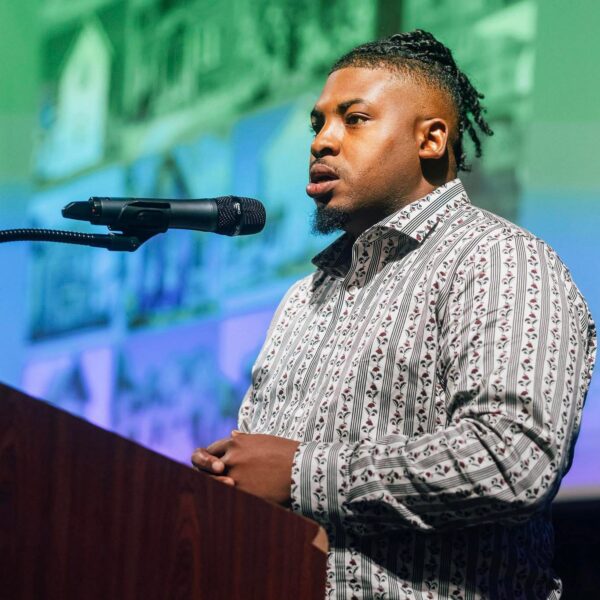
Altease Ramsey aka Altease; is a poet, music artist, motivational speaker, and storyteller who uses his voice to inspire, uplift, and connect with audiences. A TEDx speaker and passionate advocate for community and social impact, Altease blends poetry, music, and authentic storytelling to create meaningful experiences that encourage hope, healing, and change. His artistry is rooted in the belief that words and music have the power to bring people together.
Altease joins the Quad City Orchestra for a special collaboration celebrating the powerful connection between spoken word and orchestral music.
Jim Niedelman, narrator

Jim Niedelman has spent his broadcast journalism career covering local news across the country, with stops in Mississippi, Florida, Pennsylvania, Illinois, Nevada, North Carolina, and Washington before arriving in the Quad Cities in 2015.
Throughout his career, Jim has earned numerous awards for his reporting, including being named the 2005 Associated Press Reporter of the Year for Downstate Illinois. He has also been recognized for his investigative, consumer and feature reporting.
A Los Angeles native, Jim holds a bachelor’s degree in Business Administration from the University of California, Berkeley, and a master’s degree in Journalism from Northwestern University.
CitySpeaks Artists
As CitySpeaks celebrates the stories and spirit of the Quad Cities through music, we are delighted to bring our community to life on screen through artwork by local artists. We extend our sincere thanks to the following artists for sharing their talents with us.
Evie Ackerman
Cora Bentley
Patricia Bereskin
Cyrus Beyer
Isabella Cornett
Dahlia Deppe
Marian Driscoll
Mia Fitzpatrick
Sean Gould
Heidi Hernandez
Thoren Hobbs
Bethany Priaulx
Nicolas Propes
Noah Mergen
Emalynn Reyes
Brielle Rush
Evan Sammons
Felix Schermer
Rowen Schussheim-Anderson
Fiona Scott
Amos Olson Smith
Jaeger Spiegel
Ashton Stamer
Leanna Stump
Colleen Tomlinson
Fiona Cruciani Wirth
Ginny Young
Bix Historical Society Archives
PROGRAM NOTES
written by Jacob Bancks, Professor of Music, Augustana College
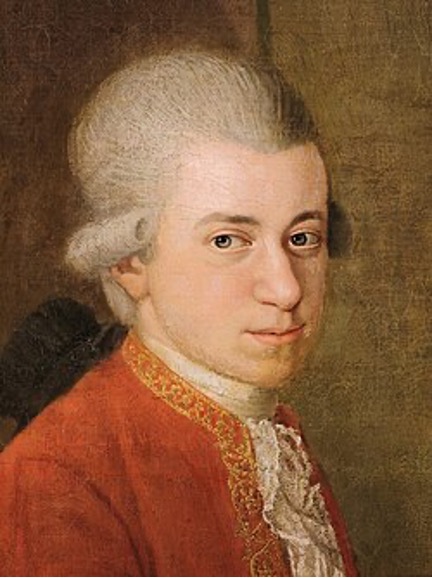
WOLFGANG AMADEUS MOZART (1756-1791) • Symphony No. 31, “Paris”
Composed: 1778
Premiere: June 18, 1778, Concert Spirituel, Pierre-Nicolas Lahoussay conducting, Tuileries Palace, Paris
Instrumentation: 2 flutes, 2 oboes, 2 clarinets, 2 bassoons, 2 horns, 2 trumpets, timpani, and strings
QCSO Premiere.
ABOUT THE WORK
As a young adult of 22, Mozart lived in Paris for about six months in 1778, but considering his views of the French and their capital, it’s a wonder he stayed that long. We know of his many grievances through his letters to his father, which included rants about the sprawling geography and filthy streets: “Everything here is too far to walk, or too muddy; for the dirt in Paris is beyond all description.” He found the French public no less aggravating, claiming “they understand nothing about music. The French are and always will be downright asses; they can do nothing themselves, so they have to fall back on foreigners.” And much of his frustration was likely personal. Just as he was trying to establish himself as a mature artist, the French public couldn’t shake their image of him as a child prodigy, and this impression no doubt frustrated his efforts to gain a respectable position as a court musician. “What annoys me most is that these stupid Frenchmen think I am still just seven years old, because that was my age when they first saw me,” he fumed. “Except the musicians; they know better.”
In addition to his general dislike of the city and its denizens, Paris was also the place of profound personal loss for Mozart. Having accompanied him there on his travels, Mozart’s mother, Anna Maria, died in Paris after a brief illness that July. “I must submit to the will of God… God gave her to me, and God has taken her away.” With his whole family grieving, and having failed to secure a lucrative position, a heartbroken and embarrassed Mozart left Paris in September, eventually returning to his hometown of Salzburg early the next year.
Premiered just two weeks before his mother’s death, Mozart’s thirty-first symphony does little to foreshadow the impending family tragedy. The piece is lively and effervescent, and throughout the work Mozart flexes his muscles in counterpoint and orchestration, even employing for the first time a trendy “upgrade” to his orchestral hardware: the then-novel clarinet.
LISTENING GUIDE
Allegro assai
- Rhythm: Within his opening theme, Mozart makes frequent use of a lively rhythm – two fast thirty-second notes, followed by a longer dotted eighth note – to punctuate his downbeats. The effect is something like hearing someone excitedly blurt the first few words of a sentence.
- Orchestration: In classical symphonies, one common role of the woodwinds is often to sustain a background harmony. Notice how when Mozart has a sudden shift from a major to a minor tonality, he will often change the woodwind colors at the same time (i.e., flutes and oboes for major, passing off to clarinets and oboes for minor).
Andante
- Rhythm: This is actually the second version of this movement that Mozart wrote for this symphony. Notice the elegant and spacious opening, with little bridges of silence to contrast the rousing opening movement. The original opening to the second movement was much more rhythmically continuous.
- Melody: Eighteenth-century melodies (like those in the music of Haydn, Mozart, etc.) frequently include consecutive half-steps (or chromatic neighbor tones) for embellishment, and Mozart uses these judiciously in this movement.
Allegro
- Rhythm: Above fast-running figures in the second violins, Mozart writes syncopated figures for the first violins, placing emphasis off the downbeats. The resulting effect can be both perplexing and exciting.
- Texture: After the movement’s opening section, Mozart writes a masterful fugato (fugue-like) section, where the same melody enters repeatedly but in different keys and delayed by two bars. You can hear the different entrances of the fugato theme because it begins with two long notes, low-high, jumping up a perfect fourth (the same interval “Here comes the bride”).
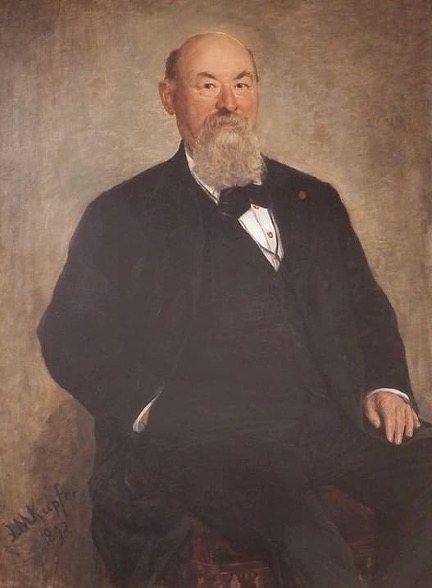
FRANZ VON SUPPÉ (1819-1895) • Morning, Noon, and Night in Vienna Overture
Composed: 1844
Premiere: February 26, 1844, Theater in der Josefstadt, the composer conducting.
Instrumentation: 2 flutes (1 doubling piccolo), 2 oboes, 2 clarinets, 2 bassoons, 4 horns, 2 trumpets, 3 trombones, timpani, percussion, and strings
QCSO Premiere.
ABOUT THE WORK
Austrian dramatist Franz Xaver Told is a minor yet intriguing figure in the history of the Viennese stage. He was most known for his extraordinarily rapid output of entertaining if forgettable stage works, popularly successful but often dismissed by critics. Literary critic Julius Seidlitz acidly described Told as “a poet who plays a lyre strung with donkey gut… Lacking any original creative power, he never rises above mediocrity; his characters blur into the mist; he is unable to provide them with firm outlines. They possess no resolute will, no foundation rooted in their own character; they stagger about like drunkards and babble unintelligible words like children. And yet, Told has just recently published several more volumes of novellas! Poor public!”
We don’t know many details about Told’s 1844 play Ein Morgen, ein Mittag, ein Abend in Wien (“Morning, Noon, and Night in Vienna”), except that the Viennese public was apparently less than impressed at its premiere; it ran for three performances. However, what preserved the play’s position in history was the incidental music written for it by theatre conductor and aspiring composer Franz von Suppé. Suppé had moved to Vienna in 1835 with his mother and was working his way up in the city’s theatrical scene. The playwright Told died five years after their collaboration, but the younger Suppé went on to a prominent place, eventually earning the unofficial title “Father of Viennese operetta.”
LISTENING GUIDE
- Harmony: Suppé’s opening phrase is in the merry key of F major, and he includes a series of brief musical motifs: a declamatory fanfare, two pizzicato, an expressive harmonic progression, and a closing exclamation. Immediately, he takes us through exactly the same string of gestures, but transformed into D minor. Notice how this change of mode completely changes the dramatic effect of this chain of events.
- Melody: The slow, pining melody that follows, marked amoroso, is one of the cello’s biggest orchestral hits of all time. In a mirror image of the transformation effected in the opening, Suppé moves the melody through minor and into major for an opposite dramatic effect (parallel major this time, from F minor to F major, for those keeping track).
- Form: After the slow introductory passages, Suppé presents a series of entertaining and engaging melodies with little interplay or repetition. This is in keeping with the purpose for which this overture was composed, as incidental music to light entertainment.
DUKE ELLINGTON (1899-1974) • Harlem

Composed: 1950
Premiere: 1951, Metropolitan Opera House, New York City, the composer conducting the Ellington Orchestra. Orchestral premiere, 1955, Carnegie Hall, the composer again conducting.
Instrumentation: 2 flutes (1 doubling piccolo), 2 oboes (1 doubling English horn), 2 clarinets (1 doubling E-flat clarinet), 4 bassoons, 4 horns, 2 trumpets, 2 cornets, 3 trombones, 2 ophicleides (usually played on tubas), 2 pairs of timpani, percussion (snare drum, cymbals, bass drum, church bells), 2 harps, and strings
3 flutes (third doubling piccolo), 2 oboes, English horn, 2 clarinets, bass clarinet, 2 bassoons, 2 alto saxophones (second doubling clarinet), 2 tenor saxophones (first doubling clarinet), baritone saxophone (doubling bass clarinet), 4 horns, 5 trumpets, 5 trombones, tuba, timpani, 2 percussion, drum kit, piano, harp, and strings
QCSO Premiere.
ABOUT THE WORK
As two of the twentieth century’s most towering musical figures, the massive achievements of conductor Arturo Toscanini and composer/bandleader Duke Ellington ran on an overlapping timeline, but in parallel musical spheres. Ellington was born in Washington D.C. one year after Toscanini was appointed to La Scala in Milan, arguably the world’s most prominent operatic post. When Ellington moved to New York City in 1923, Toscanini had already left his post as music director at the Metropolitan Opera. But in 1926 Toscanini would be appointed music director of the New York Philharmonic, just before Ellington began his work at Harlem’s famous Cotton Club, from which he began broadcasting nationwide and became a nationally-recognized figure. From 1937, Toscanini followed suit, bringing classical music to the American airwaves as the conductor of the newly-formed NBC Symphony Orchestra.
Two men of such towering gifts and prestigious careers were almost too prominent to imagine as collaborators. Yet, Toscanini reached out in the late 1940s to ask Ellington to write a work depicting the musical life of Harlem, part of what was planned as a longer musical tribute to New York City.
“It has always had more churches than cabarets,” Ellington said of Harlem, describing his inspiration. “It is Sunday morning. We are strolling from 110th Street on Seventh Avenue, heading north through the Spanish and West Indian neighborhood toward the 125th Street business area. Everybody is nicely dressed, and on their way to or from church. Everybody is in a friendly mood. Greetings are polite and pleasant, and on the opposite side of the street, standing under a street lamp, is a real hip chick. She, too, is in a friendly mood. You may hear a parade go by, or a funeral, or you may recognize the passage of those who are making our Civil Rights demands.”
Sadly, Toscanini was on his way out of public life by the time Ellington’s work had been fully orchestrated. The composer himself led the big band premiere of the work at the Metropolitan Opera House in 1951, but by the time it was ready for premiere in its orchestral version four years later, Toscanini had left the stage for good at age 87.
LISTENING GUIDE
- Instrumentation: Like a true bandleader, Ellington gives great solos to the orchestra’s principal players, particularly the trumpet, trombone and clarinet.
- Form: To show the various neighborhoods of Harlem, Ellington employs frequent tempo and texture changes. This free-winding form is often designated a “rhapsody.”
- Rhythm: In many instances throughout his score, Ellington will pair a change of tempo with a dance-style designation like “Rhumba”.
- Instrumentation: A lonely and sweet clarinet solo bridges the thrilling opening passage to the piece’s slower, nocturnal middle section. The strings’ high long tones intensify into a brief climax, whereafter a highly unusual texture of low instruments, led by the trombone and bass clarinet.
- Form: The piece reaches its high point via a lengthy, intense passage featuring the percussion section, before coming to a swift conclusion.
James M. Stephenson (b. 1969) • CitySpeaks

Composed: 2018-2019
Premiere: Quad City Symphony Orchestra, Mark Russell Smith, conducting, Adler Theatre, Davenport, April 6, 2019.
Instrumentation: piccolo, 2 flutes, 2 oboes, English horn, 2 clarinets, bass clarinet, 2 bassoons, 4 horns, 2 trumpets, 3 trombones, timpani, 4 percussion, harp, and strings.
QCSO Commission.
ABOUT THE WORK
The composer writes:
Always seeking ways to expand my musical vocabulary, and when asked to write a new work for the Quad City Symphony, I proposed the idea of a “tone-poem” that would celebrate the cities of the region by using many forms of artistic expression; a means to highlight the different cultures and talents of the quad cities, and to represent both its past and its present.
When I was supplied with one artistic rendering of the cities surrounding the river, an immediate idea for the form of the work sprang to mind, which inspired me musically and experientially.
Which was: to have 5 “blocks of sound” surrounding the orchestra, whereas each block represents a city, and the orchestra (woodwinds) represent the river. The blocks are: Davenport (2 trumpets/trombone); Bettendorf (timpani/percussion); East Moline (horn, trombone, bass trombone); Moline (strings); Rock Island (3 french horns). Furthermore, each group would play rhythmic fanfares that rhythmically emulated that of their respective city. Throughout this process, the woodwinds flow along, representing the river in the middle.
Once these fanfares subside, the tone-poem begins to work clockwise from Davenport on around, giving each city its proper dedicated music. Images on the screen accompany almost the entire work, so as to give visual reference points to the performed music.
Davenport is long known as being the home of the famous jazz cornetist of the early 20th century, Bix Beiderbecke. Thus, the music melts into one of his own most famous compositions: “Davenport Blues”. An actual recording of Bix and his band play, while slowly the orchestra begins to comment, but in music of the present day (quasi hip-hop). The text for the spoken-word artist comes from “The Atlas”, a book of prose compiled by young writers from the Quad Cities (the Young Emerging Writers Internship Program). Finally, we launch into full-fledged contemporary music, as edgy commentary is delivered about modern-day life.
Strings and oboe take us into Bettendorf, with purely orchestral lush music and flowing counterpoint. As this music quiets down, we cross the river, aided by a poem by Quad Cities native Dick Stahl: “The Mississippi River, My Compass”. The music builds again, now referencing East Moline (horns) in bold and beautiful fashion.
Moline takes on more of a busy highly-spirited tone, reminiscent of a town hard at work (the word Moline comes from the French “moulin”, or “mill town”), and so the sonorities of fast-pace and factory-life (John Deere) transition us toward Rock Island.
The spoken-word artist returns once again, bringing us back to present-day, with a poignant delivery about the gritty but nostalgic memories of a childhood spent in Rock Island. The final text of “she sings” is echoed throughout the orchestra, as once again the river begins to flow.
Fanfare memories again begin to hearken, with Dick Stahl’s poem about Bix once again launching us back into a full-on orchestral accompaniment to Bix performing his “Davenport Blues”. Finally the modern-day orchestra takes over, once and for all, complete with the orchestra’s own “jazz combo” out front, and the triumphant fanfares return, sending the music and its cities’ representation to a glorious finish.
I am most grateful to Music Director Mark Russell Smith, and the Quad City Symphony administration, for engaging me to dive deep into the history of their area, so that I might do my best to give it proper representation. It is projects like this that give my creative output depth, and flavor, and I most enjoyed formulating a musical scheme to combine so many elements of history and arts into a unique musical work.